The Rule Of 20 In Action
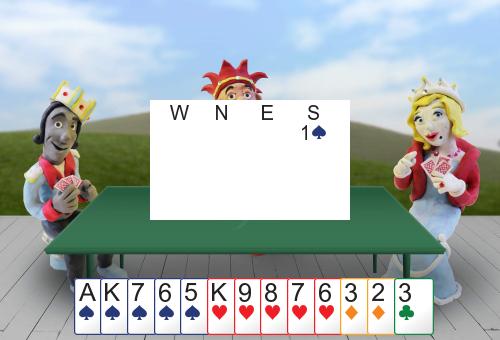
Here's a hand from one of our daily free bridge games.
An Opening Hand With 10 High Card Points
South's points are the ♠A (4), ♠K (3) and ♥K (3). That's 10 high card points. The two longest suits are spades (5) and hearts (5). That's 10 length points. 10 high card points + 10 length points = 20. 20 total points is enough to open.
When To Use The Rule Of 20
Looking at your borderline hand with 10 or 11 High Card Points and wondering whether you should open the bidding is one of the most common decisions you'll make in bridge. If you pass, you might let your opponents steal the contract; if you bid, you risk getting too high. Fortunately, you don't have to guess.
The Rule of 20 considers both high card points and distribution as a simple guideline designed to help you confidently decide whether a light, shapely hand is worth opening.
It's only supposed to be used for opening the bidding in first and second seats. In third seat players often open light anyway so there's no need for a special rule. In fourth seat there's no need to open light to disrupt opponents. They've both passed!
Rule of 20 Practice Dealer
To help you master this concept, you can use this Rule of 20 Practice Tool. You can deal random hands to test your math skills instantly, or read on to break down the exact formula and expert nuances like the Rule of 22
Test random holdings to master light openings.
The Rule of 22: Taking The Rule Of 20 A Step Further
Not all points are equal! The rule of 22 takes into consideration 'quick tricks' as follows:
To use the rule of 22, start with the rule of 20, add your quick tricks and check if the total comes to 22.
- AK in a suit = 2 Quick Tricks
- AQ in a suit = 1.5 Quick Tricks
- A or KQ in a suit = 1 Quick Trick
- K in a suit = 0.5 Quick Tricks ( not singleton K )
An Opening Hand Using The Rule Of 20
South's points are the ♠A (4), ♠K (3) and ♥K (3). That's 10 high card points. The two longest suits are spades (5) and hearts (5). That's 10 points length. The ♠A and ♠K is 2 quick tricks. The ♥K is .5 quick tricks. That's 2.5 quick tricks. 22.5 is enough to open.
Singleton Kings Are No Good
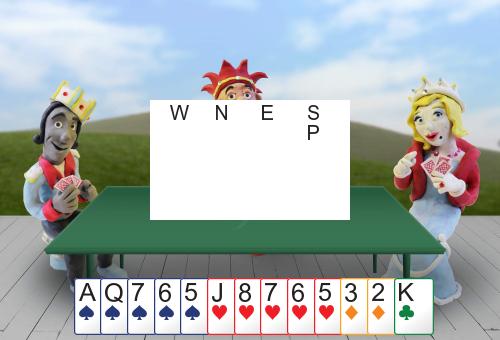
South has 10 high card points. South has 10 length points. The ♠A and ♠Q is 1.5 quick tricks. The ♥K is 0! Singleton Kings don't count. That's 1.5 quick total. 21.5 total points is not enough when using the rule of 22.
Hand Evaluation
Honours in short suits don't pull their weight. They don't help us set up tricks in our long suit and, especially in the case of singletons, they often don't win tricks at all.
Weak Suit
The club honours aren't well placed. They're not helping to establish your long suits. If you open 1♠ and partner responds 2♥ what will you bid? Maybe it's still worth opning this hand but things could go wrong.
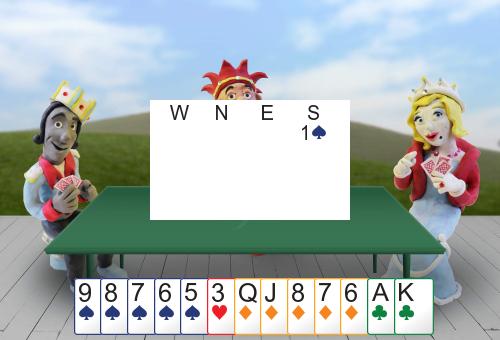
I favor light opening bids, when you're my age you're never sure they're going to get back to you in time.