Tricks And Trumps
Bridge is a trick-taking game. You may be familiar with some other trick-taking games like 500, euchre, spades, there are lots of others. If you've played any of those games then you'll already know about tricks. If not, let's talk about tricks for a moment.
Card Rank
The cards are ranked from the top - Ace, King, Queen, Jack, ten, nine, eight, seven, six, five, four, three, two.
The Lead
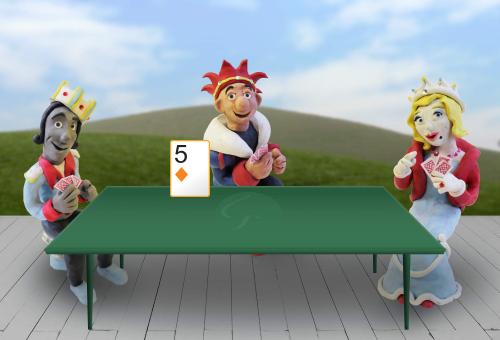
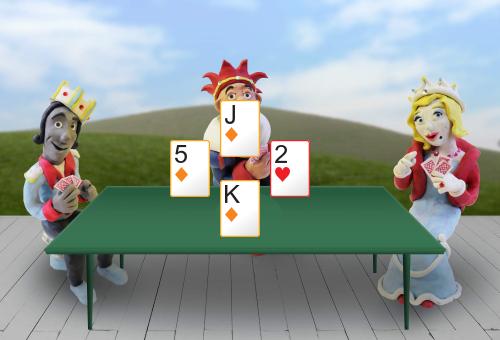
One player plays a card face up on the table. That's the lead. We'll discuss who gets to lead shortly but in this example West has led the ♦5.
Following Suit
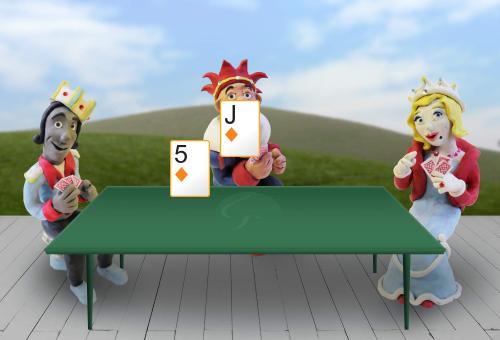
Each player in clockwise rotation plays a card of the same suit that was led. North follows suit with a diamond.
What If You Can't Following Suit?
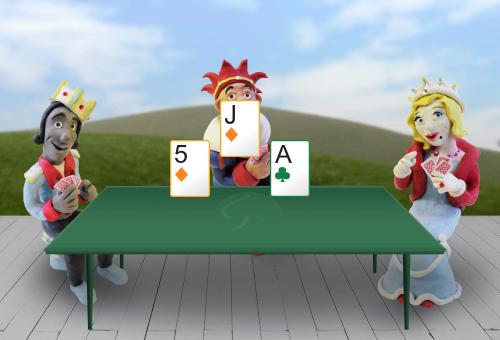
If you can't follow suit you can play any card. East doesn't have any diamonds and plays the ♣A.
Winning Tricks
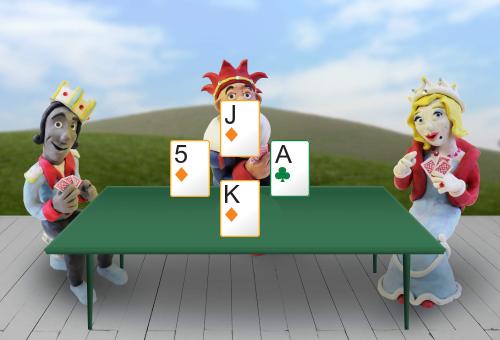
South plays the ♦K to complete the trick. The highest card of the suit led normally wins the trick.
The Ace is the highest card in a suit but the ♣A is not the same suit that was led. West led the ♦5, therefore the ♦K wins the trick.
Trumps Beat All The Other Suits
Sometimes there is a boss suit called the trump suit. That suit changes from hand to hand and we'll go over that in just a moment.
Imagine hearts were trumps on this hand. In that case the ♥2 would win the trick.
Players and Cards
Bridge is played by four players in two partnerships.
On this site you'll be playing with a computer partner and opponents so you'll be able to learn on your own.
The Players
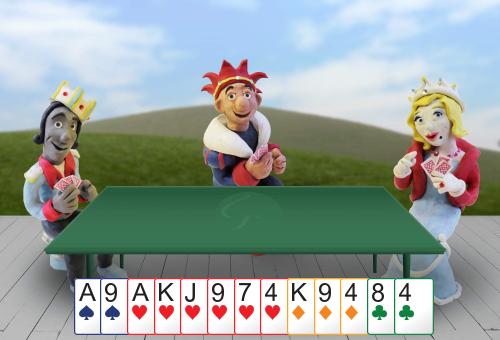
Our partner is sitting at the top of the table in the North seat. Our opponents are sitting East and West and we are in the South seat. Each player is dealt 13 cards from a 52 card deck. You can see our cards at the bottom of the screen.
The Auction
Before any tricks are played there is an auction where players bid for the right to name the trump suit. You can also bid notrumps which means on the hand there is no trump suit. If you don't want to say anything you can pass.
Suit Rank
During the auction the suits have a rank. Clubs are the lowest, then diamonds, then hearts, then spades, then no trumps.
Bidding and Passing
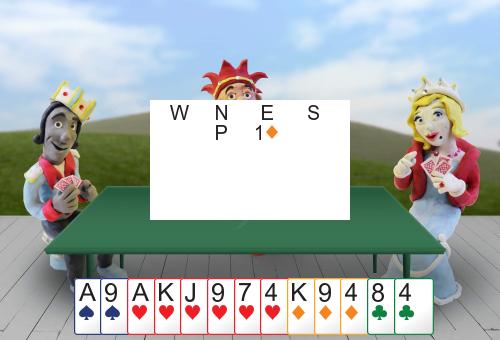
North has passed, East has bid 1♦ so East wants diamonds to be the trump suit.
The Auction Continues
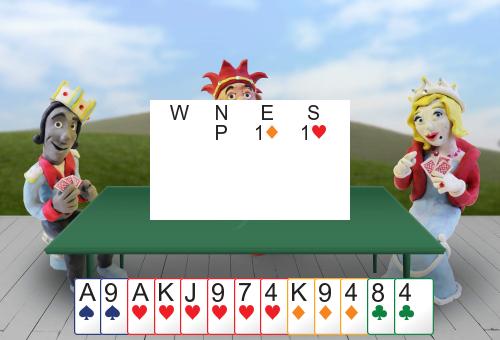
Look at all those hearts in our hand! If we can get hearts to be the trump suit we're going to get a lot of tricks. So we'll have to bid something higher than one diamond and it looks like we're going to have to bid 2♥ because 2♥ is higher than 1♦.
But hearts are a higher ranking suit than diamonds so we only have to bid 1♥.
Going, going, gone!
After there have been three passes in a row the auction finishes.
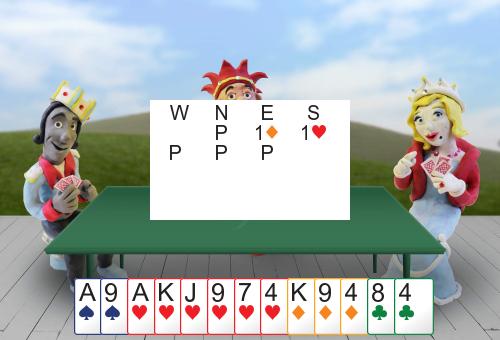
The first player to bid is called the 'opener'. Opener normally starts by bidding 1 of a suit or 1NT but sometimes opening bids are made at higher levels.
The Play Of The Hand
Now we get to the trick taking part of the game.
Declarer And Dummy
We bid hearts first so we become what's called the 'declarer'. Declarer's partner is called the 'Dummy'
The Opening Lead
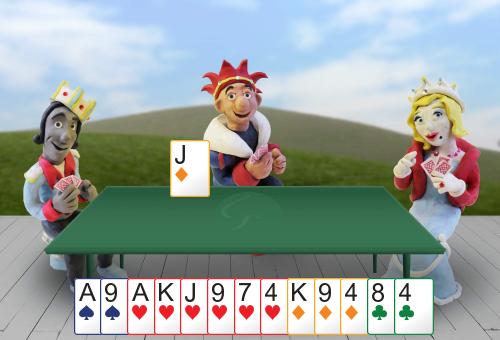
The player to the left of the declarer, that means West on this hand, plays the first card. West has led the ♦J.
The Play Continues
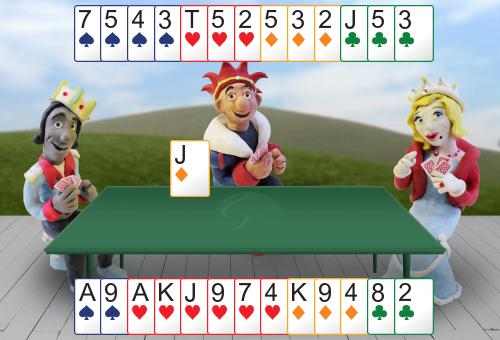
Dummy puts all their cards face up on the table.
Declarer gets to choose what cards to play from the dummy and their own hand as each trick is played.
Whoever wins the trick plays first to the next trick and that's how it goes until all 13 tricks have been played.
The Result
The final bid becomes the contract. To fulfil the contract, declarer needs to win the number of tricks bid plus another six. In our example hand the contract was 1♥ so declarer needs to make 1 + 6 = 7 tricks.
You know enough now that you could go ahead and play your first hand.
Two things that I love about duplicate bridge are how it reduces the luck element of the game and how it lets you talk about hands after. Since everyone plays the same hands I no longer get upset when I’m dealt a bad hand as I’m aware that I will be compared against others holding the exact same hand as myself. This helps make every hand count and there be less irrelevant boring hands. Another significant upside of duplicate is the ability to socialize and discuss boards with others after playing the boards. Since everybody plays the same boards you can ask how others went, what they did in your position or how they bid a hand.