Leading from length
Leading your long suit, especially against a notrump contract, is a common way of establishing extra tricks.
Top of a sequence
When you have a sequence of touching honours leading the top of that sequence let's partner know about your holding in the suit. You may already know from other bridge lessons that the lead of an honour shows the honour below but denies the honour above.
On this hand South leads the ♠Q. North now knows that South has the ♠J but not the ♠K
Interior sequences
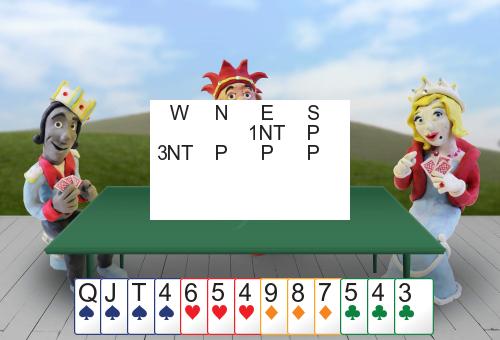
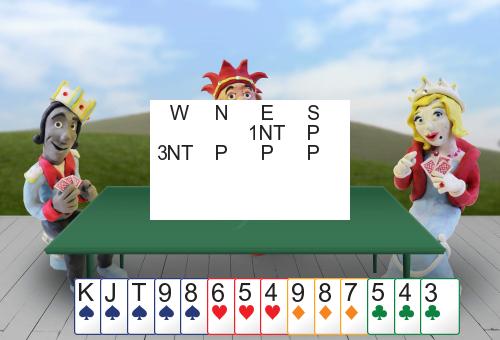
A suit such as KJT98 is called an interior sequence. The King is sitting up there on his own but there is JT98 below. Lead the Jack, top of the interior sequence.
4th highest
The lead of a low cards promises an honour so your partner will know that's the suit you would like to establish.
When leading a low card from a long suit a common agreement is to lead your fourth highest. Doing so will help partner know the length of your suit.
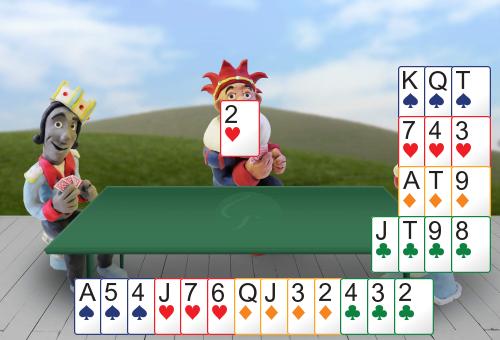
In this first example, North leads the ♥2 against West's 3NT contract. North has no cards lower than the 2 so he must have started with exactly four hearts.
Showing Length
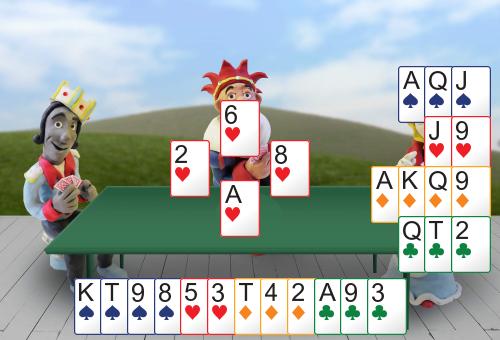
This time, North leads the ♥6 against West's 3NT contract. You can't see the ♥4 yet so you can't be sure about North's heart length. Once you see the ♥4 you'll know whether North started with four or five hearts.
Top of a weak suit.
South's longest suit is spades but the suit is weak so he leads the ♠8.
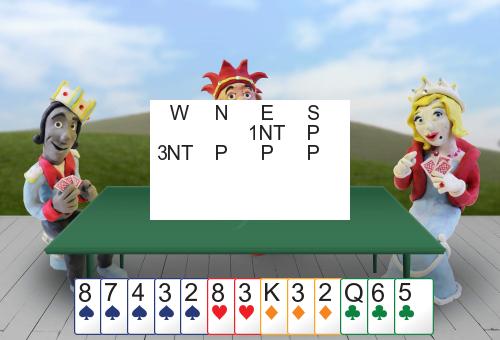
Some players like to lead second highest of a weak suit and others still choose the fourth highest even with no honours in the suit. You can talk about it with your partner and make your own decisions, there are pros and cons to each approach.
M.U.D
Middle, up, down or simply M.U.D.
Short suit leads.
Against a suit contract you also have the option of leading a short suit to try and score a ruff.
Leading a singleton hoping for a ruff
Here you're on lead against 6♠. You could try leading your ♣4. Partner might be able to win the trick with the ♣A and return the suit for you to ruff. Partner might even win a trump trick and be able to give you a ruff before declarer is able to take away all your trumps.
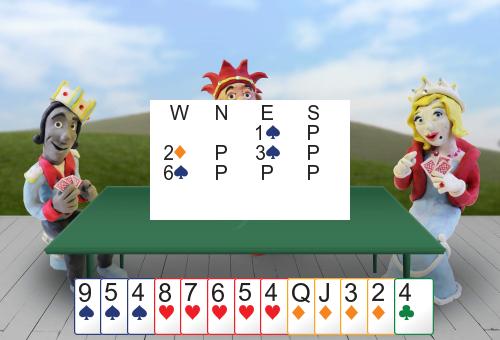
Top of a doubleton.
This time no lead looks particularly attractive but if there is only one unbid suit that can be a good option.
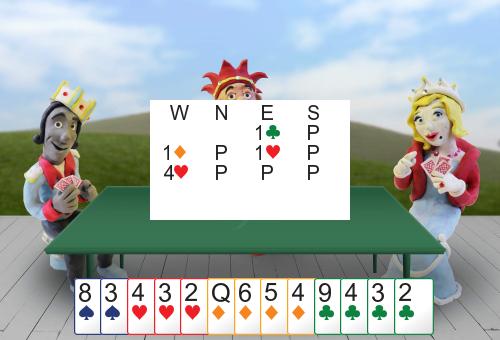
Lead the ♠8, top of a doubleton, and partner will know you don't have an honour in the suit.
Trump Leads
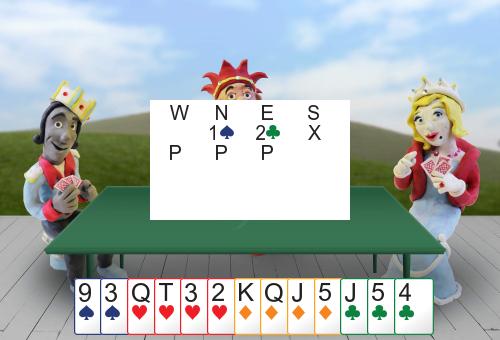
An opening lead of a trump can sometimes be an effective way of preventing declarer taking ruffs in dummy. One clue to when it might be the right thing to do is when you know dummy's side suit isn't breaking well.
Your double was takeout but partner passed so he must have very good trumps. A club lead will spell doom for declarer and happiness for your side.
Leading Away From An Ace
The normal opening lead from a sequence of honours is the highest card in the suit. If you have a suit headed by an ace and you choose to lead a low card from that suit you're said to be 'leading away from an ace' or 'underleading an ace'.
Any time you underlead an honour there's a risk that you might not end up making your honour at all. But often the best chance of defeating a contract is to set up tricks in your long suit so it's worth trying. However, against a suit contract it's just not worth the risk to underlead an Ace.
Underleading an ace against a suit contract
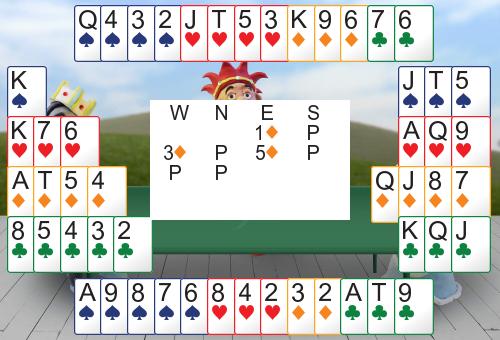
The contract is 5♦ by East. If South leads a small spade West's ♠K will make and declarer will be able to ruff any further spade leads. That's bad for the defence.
To be sure, sometimes underleading an ace can be spectacularly succesful. It's not a rule that you can't do it. That's bridge!
Underleading an ace against notrumps is fine
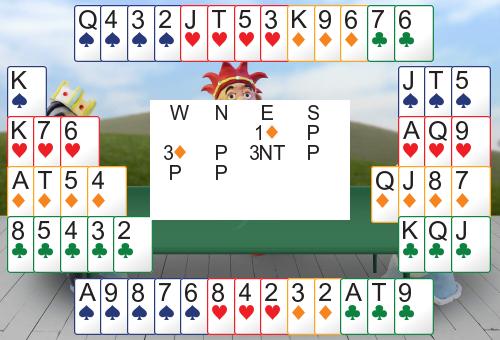
Same hand but this time the contract is 3NT by East and South leads the ♠3. West's ♠K makes but as soon as the defence regain the lead they can take four spade tricks. Underleading an ace against notrumps is fine because you'll almost always still be able to take your trick later.
Leading partner's suit
If partner has bid, it's often a good idea to lead that suit.
Keeping partner happy?
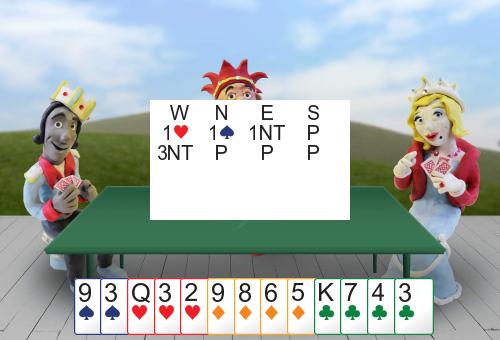
You might have chosen to lead a club but partner bid spades so leading the ♠9 will help establish partner's suit. But we're not just leading it to keep partner happy, our job is not to make partner happy, our job is to defeat the contract! We're leading partner's suit because it's likely going to be the suit with our greatest combined length.
Stick With Your Usual Card
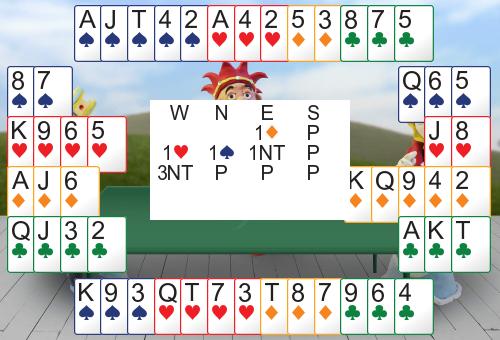
Some players always lead the top of partner's suit. That's a mistake. If South leads the ♠K on this hand then East will eventually win a trick with the Q.
If South leads a low spade, the defence will take all 5 spade tricks.
The reason some people like to always lead the top of partner's suit is that it signals their holding in that suit. But as we've seen on this hand it often gives away a trick. Low from an honour also shows your holding in the suit so you're still getting the message across, it's just that partner needs to think a little harder. Well, partner, if you want to defeat more contracts then you're going to have to do more thinking!