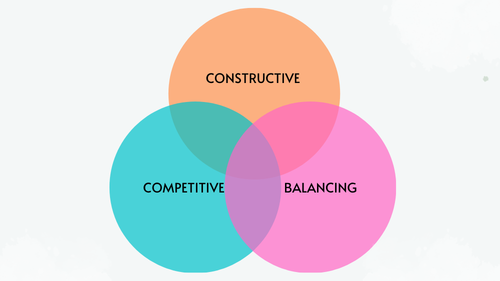
Constructive Bidding
When just you and your partner are in the auction it's all about constructive bidding. You'll be trying to decide whether to play in a suit or notrump contract and whether to play in a partscore, game or slam.
This is where you'll be using a bidding system such as Acol, Standard American, 2/1, Precision or even something else.
You can enhance your basic bidding system with conventions like fourth suit forcing and trial bids.
What Contract Can We Make?
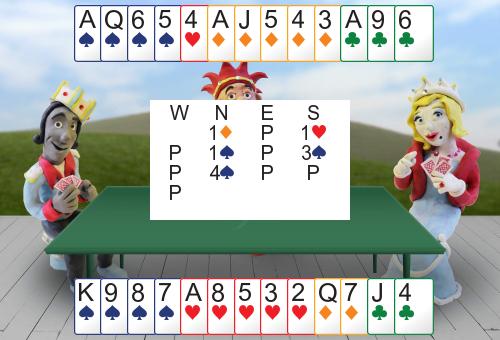
On this hand North and South have a constructive auction to 4♠.
Competitive Bidding
Although many bridge lessons focus on constructive bidding, our pesky opponents won't always give us a clear run. In competititive auctions, where both sides are bidding, your combined trump length is a good indication of how high you should be bidding. For that reason, showing your suit length as quickly as possible with an overcall or double helps partner to make better bidding decisions.
Other hand evaluation techniques will help you to decide if you'll make your contract whereas trump length helps you decide whether the contract you bid to will be a good sacrifice.
The better your trump fit, the higher you can compete.
- 8 trumps between the 2 hands = bid for 8 tricks
- 9 trumps between the 2 hands = bid for 9 tricks
- 10 trumps between the 2 hands = bid for 10 tricks
Sacrifice Bidding
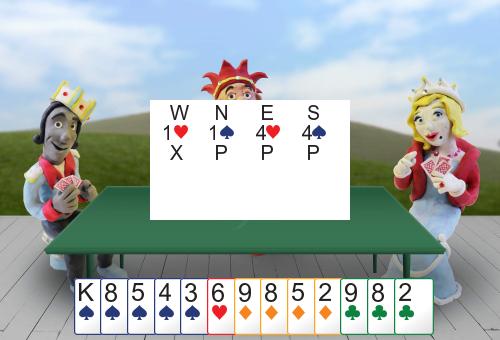
On this hand you have a 10 card spade fit! Note that it doesn't guarantee that you will make 4♠, only that it is a good idea to bid it! You'll either make your contract or it will be a good sacrifice.
Balancing
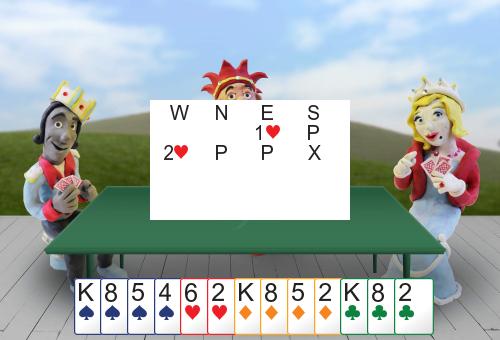
When the opposition have been doing all the bidding but then stop at a low level you will sometimes want to get back into the auction. That's known as balancing. It takes courage but learning to balance at the right time will help your scores a lot.
Re-entering the auction
Even if the opposition have opened the bidding, if we can overcall or double to show something about our hand we're going to get an idea of whether or not we've got a fit. But sometimes there just doesn't seem to be anything to say.
Luckily a tiny little bit of knowledge about bridge odds tells us what we need to know. If they have a fit, we probably have a fit.
Did we bid ok?
Did we make a mistake? Were we just unlucky? Or lucky?
Contract Checker
Forget what the actually happened at the table and don't look at the oppositions' cards. Just look at your hand and partner's and compare to the chart. Don't let the actual result influence you one way or the other.
The result of one hand often doesn't tell us much. We're looking for a long term winning strategy.
